
Introducing:
ECAT ™
(Enhanced Clinical Assessment Technologies)
A Comprehensive Point-of-Care Multi-Screening Platform for
Primary Care Clinics

Meet Your ECAT Sales Team!
Covered by Health Insurance Carriers
ECAT™ is a powerful point-of-care platform that delivers a comprehensive range of screenings and assessments for the most commonly encountered conditions in your practice.
The platform enables real-time screening for conditions such as Depression, Anxiety, Cognitive Decline, TBI, PTSD, ADHD, and more, while generating clinical documentation before prescribing or referral decisions are made, all within a single extended visit.
Key Benefits of Integrating ECAT into Your Clinic:
- Improve the Quality of Care
- Enhance the Patient Experience
- Reduce Provider Workload
- Integrate Seamlessly with Epic, Cerner, and Other EMR Systems
- Create New Revenue Growth Opportunities

ECAT™ is exempt from 510(k) premarket notification and is proudly designed and manufactured in the USA in an FDA-registered facility.
ICD-10 Codes for ECAT Utilization |
Condition |
| F32.0–F32.5, F32.9, F33.0–F33.4 | Depression |
| F41.0, F41.1, F41.8, F41.9 | Anxiety Disorders |
| G31.84, G30.1, F02.80, F02.81, F01.50, F01.51, F03.90, F03.91 | Cognitive Impairment |
| F43.10, F43.11, F43.12 | PTSD |
| F07.81 | Concussion |
| F90.0, F90.1, F90.2. F90.9 | ADD / ADHD |
List of Automated Tests
Results are color-coded and automatically calculated based on age-adjusted normative data.
Standard Tests
-
Trail Making Test – Part A
Assesses visual attention, processing speed, mental flexibility, and motor function. -
Trail Making Test – Part B
Evaluates executive function, divided attention, working memory, and cognitive flexibility. -
GPCOG (General Practitioner Assessment of Cognition)
A quick screening tool for mild cognitive impairment and dementia in primary care settings. -
MMSE (Mini-Mental State Examination)
A widely used 30-point questionnaire for screening cognitive function, including orientation, recall, and language. -
CAPS-5 (Clinician-Administered PTSD Scale for DSM-5)
The gold standard for assessing Post-Traumatic Stress Disorder (PTSD), based on DSM-5 criteria.
Fully Automated Pupillometry Tests
Assess autonomic nervous system function—no patient input required.
- Pupil & Ocular Reaction Measurements
Evaluates pupil size, reactivity, and ocular neurological responses to standardized light stimuli.
⏱️ Duration: 2 minutes - Sideline Test for Athletes
A rapid concussion screening tool for immediate assessment of neurological function.
⏱️ Duration: 30 seconds - Cognitive Alertness Test
Measures cognitive function and alertness in real time.
⏱️ Duration: 30 seconds

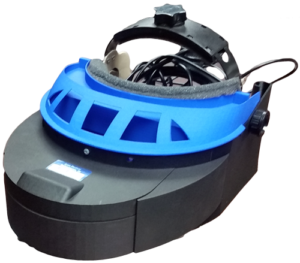
ECAT is lightweight, portable, and easy to use.
FOR CLINIC OWNERS AND DECISION MAKERS
Read our PDF guide on ECAT™ and Intellig-EYES™, and apply online today to become an approved provider of ECAT™ and Intellig-EYES™.
WHAT TO EXPECT AT THE EVALUATION
Intellig-EYES™ is a lightweight headgear placed over the patient’s head and collects 140 parameters of the performance of cranial nerves II, III, IV, and VI. This procedure is non-invasive and easy to perform. No voluntary responses are required from the patient. The total evaluation will take approximately 20 minutes. The collected data can serve as an aid for immediate treatment or as a baseline for following the progression of the patient’s condition.
